Scaling Businesses with Social Media: Tactics That Work
Social media is crowded – but the brands that grow are not just posting more; they are posting smarter. Discover the tactics that separate fast‑growing businesses from everyone else. One shift in approach could change the entire trajectory of your online presence.
-
 By
Amal Purakkal
|
By
Amal Purakkal
|
- • 14 min Read
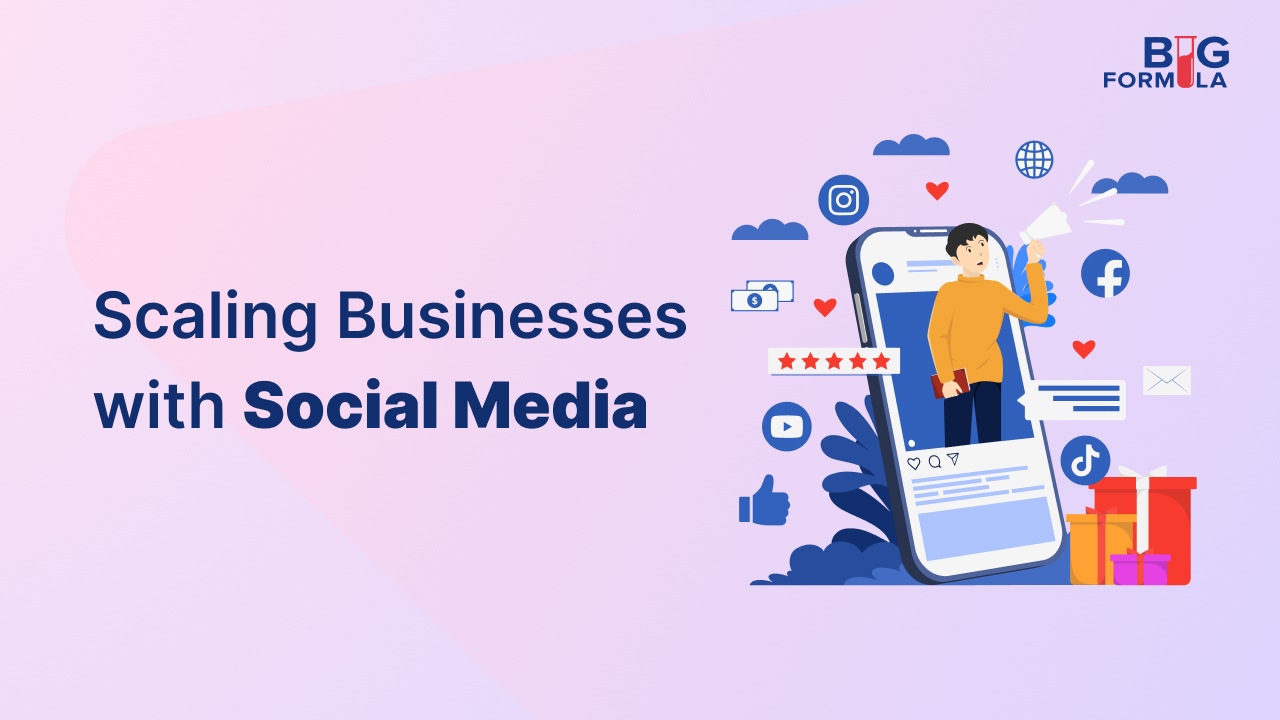
Companies today work in a world where everything is connected, and getting attention is important for success. People no longer find brands through traditional advertising, shopfronts, or word-of-mouth. Rather, people use the internet to search, scroll, compare, and interact before making choices. Due to this change, social media platforms are now at the centre of contemporary corporate growth, providing opportunities that were previously exclusive to big businesses with enormous expenditures.
The difficulty facing small company owners is not whether to utilise social media, but rather how to use it effectively. Meaningful outcomes are rarely achieved by posting at random, following trends aimlessly, or distributing efforts too far. A targeted, goal-oriented strategy that synchronises social media activity with corporate goals, consumer behaviour, and quantifiable results is what works.
Social media for business growth becomes more than just a marketing tool when handled properly. Over time, it develops into a mechanism for increasing brand authority, fostering customer connections, producing leads, and establishing trust. This manual deconstructs tried-and-true strategies to assist small companies in purposefully establishing, refining, and growing their social media presence. Here, we look at useful advice intended to promote long-term development rather than transient visibility, from selecting the appropriate platforms to producing content that converts.
Laying the Foundation: Setting Up Social Channels with Purpose
Small companies need to lay a solid foundation before launching campaigns or publishing content. Across all touchpoints, social media platforms must consistently convey the brand’s identity, values, and consumer promise. Instead of trying to be everywhere at once, this starts with selecting platforms that are in line with the target demographic.
For instance, service-based companies could find higher interaction on Facebook or LinkedIn, while visual brands often do better on Instagram.
Optimising Profiles and Defining Clear Goals
Optimising your profile is equally important. Contact details should be readily available, profile photos should be professional, and business descriptions should clearly convey value.
Setting quantifiable objectives is equally crucial. Every social media platform should promote a particular company goal, whether that goal is website traffic, customer service, brand exposure, or lead creation. In contrast to reactive posting habits, a solid foundation guarantees that future social media marketing initiatives stay planned, deliberate, and in line with long-term company aims.
Understanding Your Audience Before Creating Content
Understanding your audience is the first step in developing effective social initiatives. Small companies have a big edge when they take the time to find out who their consumers are, what issues they are having, and how they consume material. Social media platforms come with built-in statistics that provide content choices, interaction trends, and demographic information.
Listening is just as important as facts. Real consumer issues and motives may be found by keeping an eye on reviews, comments, communications, and exchanges with competitors. Engagement naturally rises when material focusses on real needs rather than generic advertisements.
The audience’s understanding also affects the tone and organisation. Some people like instructional videos, while others like short films or stories about what happens behind the scenes. When the style of the material matches what the audience wants, social media sites go from being instruments for broadcasting to meaningful communication channels that build trust and loyalty.
Content That Converts: Creating Value Before Selling
Social success is still fuelled by content, but not all material makes an equal contribution to development. The best strategy for small companies strikes a mix between advertising, involvement, and education. When utilised strategically, advertising messages spur action, interactive material promotes involvement, and educational pieces establish authority.
Consistency, Planning, and Visual Storytelling
Volume is not as important as consistency. Frequent, aimless updates are less successful than a reasonable publishing schedule that produces high-quality material. Posts may be synchronised with campaigns, seasons, or new product releases with the use of content calendars, which also guarantee diversity and rhythm.
Visual storytelling helps people remember things better. Pictures, infographics, and movies make hard ideas simpler to comprehend and more likely to be shared. This method encourages social media marketing for SMEs and enhances brand recall over time by portraying the organisation as a helpful, reliable presence rather than a constant commercial.
Turning Engagement into Measurable Growth
Comments and likes only have value when they help achieve company objectives. It is imperative for small businesses to shift their attention from vanity metrics to actions that show progress, including website visitors, enquiries, bookings, or sales.
Calls to Action and Performance Tracking
Audiences are guided towards the following stages by clear calls to action. Every campaign should have a specific conversion objective, whether that goal is to visit a website, sign up for a newsletter, or seek a quote. Platform insights and website analytics are examples of tracking technologies that can link social engagement to concrete results.
Visibility is also bolstered by engagement. Content that encourages engagement is given preference by algorithms, increasing organic reach without requiring further investment. By enhancing organic presence and decreasing dependence on sponsored advertising, this cycle of interaction and exposure eventually speeds up social media marketing for small businesses.
Leveraging Paid Social Strategically
When used correctly, paid social media may speed up results, while organic growth can build trust. Small companies might benefit a lot from focused efforts that focus on certain goals, such as generating leads or retargeting warm audiences. Even little amounts of money may have a big impact when they are used with appropriate targeting and compelling creatives.
Testing is very important. Small-scale tests with different groups of people, messages, or visuals indicate what works best. Paid ads should not replace organic efforts; instead, they should support high-performing content and bring in new viewers.
Paid tactics improve social media for business growth by reducing sales cycles and raising exposure among high-intent audiences without taxing scarce resources when they are in line with more general objectives.
Building Trust Through Consistency and Authenticity
Sustainable success, particularly for small firms competing with larger brands, is built on trust. Social media channels provide a chance to humanise the company by presenting actual people, values, and brand narratives. Genuine conversation fosters enduring loyalty and improves emotional ties.
Credibility is strengthened by consistency. Across all channels, the messaging, tone of voice, and visual style should be consistent. Reliability and customer loyalty are further demonstrated by immediately answering messages and comments.
This steady presence helps social media marketing over time by presenting the company as personable, trustworthy, and customer-focused rather than transactional or aloof.
Measuring, Learning, and Scaling What Works
Growth-oriented social policies depend on ongoing education. Frequent performance assessments assist in determining which platforms yield results, what material generates interaction, and where changes are required. Effectiveness is shown by metrics like reach, engagement rate, conversion rate, and cost of client acquisition.
Scaling should be done on purpose. If beneficial patterns start to show up, businesses may gradually put in more effort, create more content, or make more confident investments in sponsored marketing. Automation solutions may help with scheduling and reporting, which gives you more time to come up with new ideas and make plans.
This iterative process guarantees that social media marketing for SMEs changes with the company, according to shifting objectives, client preferences, and market dynamics.
Partnering for Smarter Growth with BIGFORMULA
Effective social media scaling necessitates knowledge, consistency, and strategic clarity aspects that many small company owners find difficult to handle on their own while managing day-to-day operations. At this point, expert advice becomes a growth enhancer rather than a cost.
Collaborating with professionals who comprehend platform dynamics and commercial realities is the last phase in growing. With the help of BIGFORMULA, small companies can use data-driven planning, innovative execution, and ongoing optimisation to turn social media platforms into organised growth engines. Grow with BIGFORMULA assists businesses in achieving sustained digital growth that yields tangible business benefit by coordinating strategy, content, and performance assessment. In a digital world where attention is scarce, the brands that win are the ones that show up with intention, create with purpose, and connect with authenticity – every single day.